
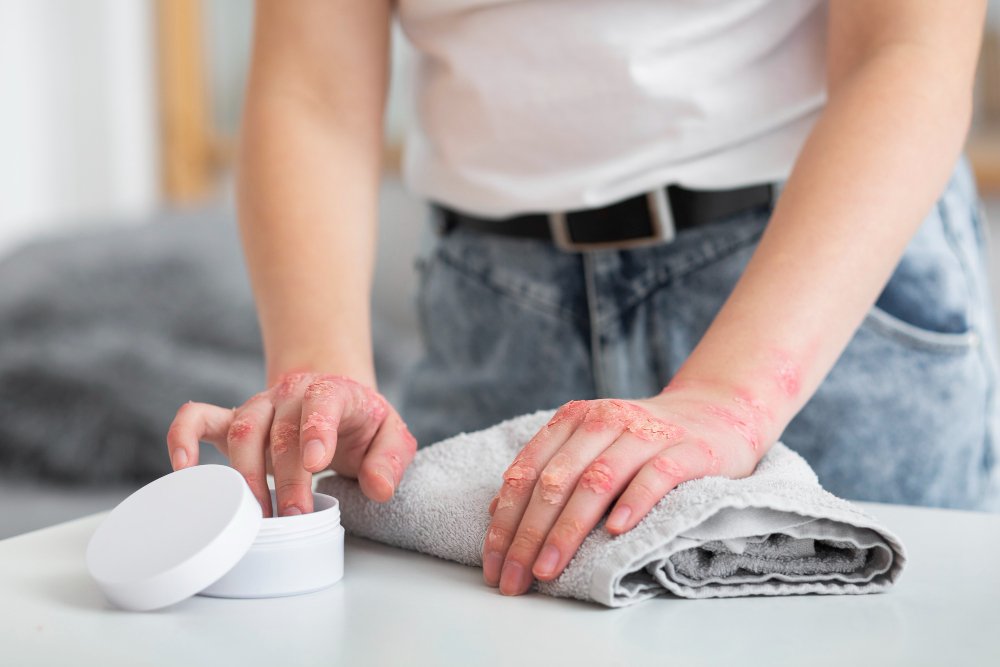
What is Psoriasis?
Psoriasis is a long-term skin condition. It causes skin cells to grow too fast. As a result, thick, red, and scaly patches form on the skin. These patches can appear anywhere, but they often show up on elbows, knees, scalp, and lower back. According to the World Health Organization, psoriasis affects about 2–3% of people worldwide. While it is not contagious, it can be uncomfortable. For many, it also affects daily life and self-esteem. Because psoriasis is a chronic disease, symptoms may come and go over time.
Common Symptoms of Psoriasis
Although psoriasis symptoms can vary, some signs are very common. For example, many people notice:Red patches of skin covered with silvery scalesDry or cracked skin that may bleedItching, burning, or soreness in affected areasThickened or ridged nailsSwollen or stiff joints (in some cases)
Sometimes, symptoms get worse during flare-ups. However, they can also improve with treatment or lifestyle changes.
Causes and Risk Factors
Scientists do not know the exact cause of psoriasis. Still, research shows it is linked to the immune system. In psoriasis, the immune system attacks healthy skin cells by mistake. This causes rapid skin cell growth. Genetics also play a role. If a family member has psoriasis, your risk is higher. In addition, certain factors can trigger or worsen symptoms. These include:StressSkin injuries, like cuts or sunburnsInfections, such as strep throatCold, dry weatherSmoking or heavy alcohol useCertain medications
Because triggers vary, it helps to track what affects your skin. This can make it easier to avoid flare-ups.
How Psoriasis is Diagnosed
Doctors usually diagnose psoriasis by looking at your skin. They may ask about your symptoms and family history. Sometimes, they will take a small skin sample, called a biopsy. This helps rule out other skin problems. In most cases, no special tests are needed. However, if joint pain is present, your doctor may check for psoriatic arthritis. Early diagnosis can help manage symptoms and prevent complications.
Treatment Options for Psoriasis
There are many psoriasis treatment options. The choice depends on how severe your symptoms are. For mild cases, doctors often suggest creams or ointments. These may include:Moisturizers to reduce drynessCorticosteroids to ease swelling and rednessVitamin D creams to slow skin cell growth
For moderate or severe psoriasis, other treatments may be needed. For example, your doctor might recommend:Light therapy (using special UV light)Oral medicines that calm the immune systemBiologic drugs given by injection
Because each person is different, your doctor will help find the best plan for you. The Centers for Disease Control and Prevention notes that sticking to your treatment can help control symptoms.
Living with Psoriasis: Lifestyle Tips
Living with psoriasis can be challenging. However, many people find relief by making small changes. For instance, you can:Keep your skin moisturized every dayTake gentle baths with mild soapWear soft, loose clothing to avoid irritationManage stress with relaxation techniquesEat a balanced diet rich in fruits and vegetablesAvoid smoking and limit alcohol
Because support matters, joining a local or online group can help you feel less alone. Many cities offer resources for people living with psoriasis.
Prevention and Flare-up Management
While you cannot prevent psoriasis entirely, you can lower your risk of flare-ups. For example, you can:Identify and avoid your personal triggersProtect your skin from cuts and sunburnStay hydrated, especially in dry weatherFollow your treatment plan as advisedSee your doctor if symptoms change
When you take these steps, you may notice fewer or milder flare-ups. Over time, managing psoriasis becomes easier with the right support and care consult now at ZOH Aesthetic Clinic.